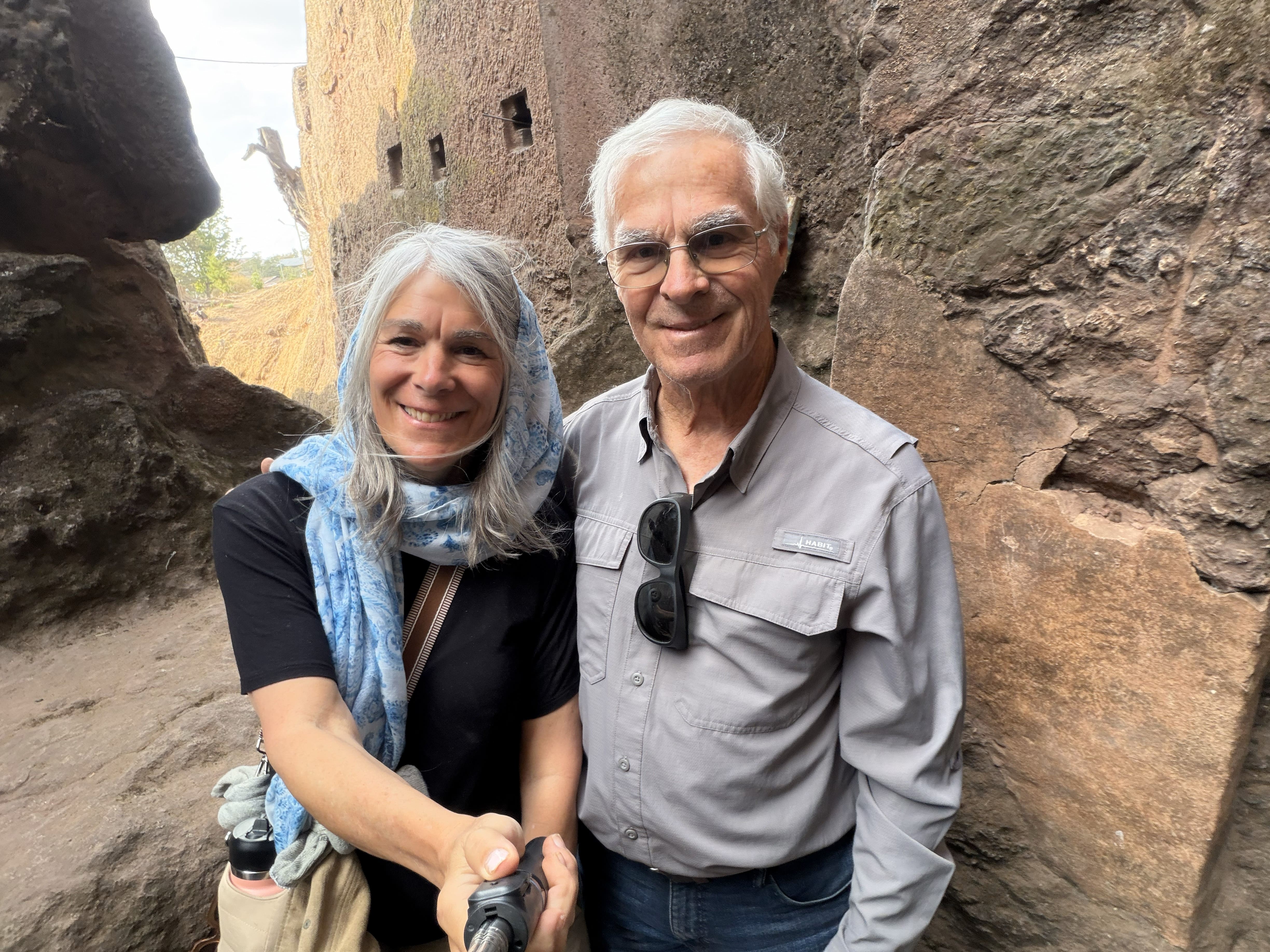
My daughter Audrey and I joined a small band of fellow adventurers—just 14 of us in all—for an unforgettable journey across Ethiopia, a country that feels as ancient as time and as vibrant as tomorrow.
Our route traced a remarkable path through Addis Ababa, the castles of Gondar, the lakeside beauty of Bahir Dar, the breathtaking heights of Simien Mountains National Park, the sacred rock-hewn churches of Lalibela, and deep into the culturally rich south through Jinka, Arba Minch, and Awassa (Hawassa).
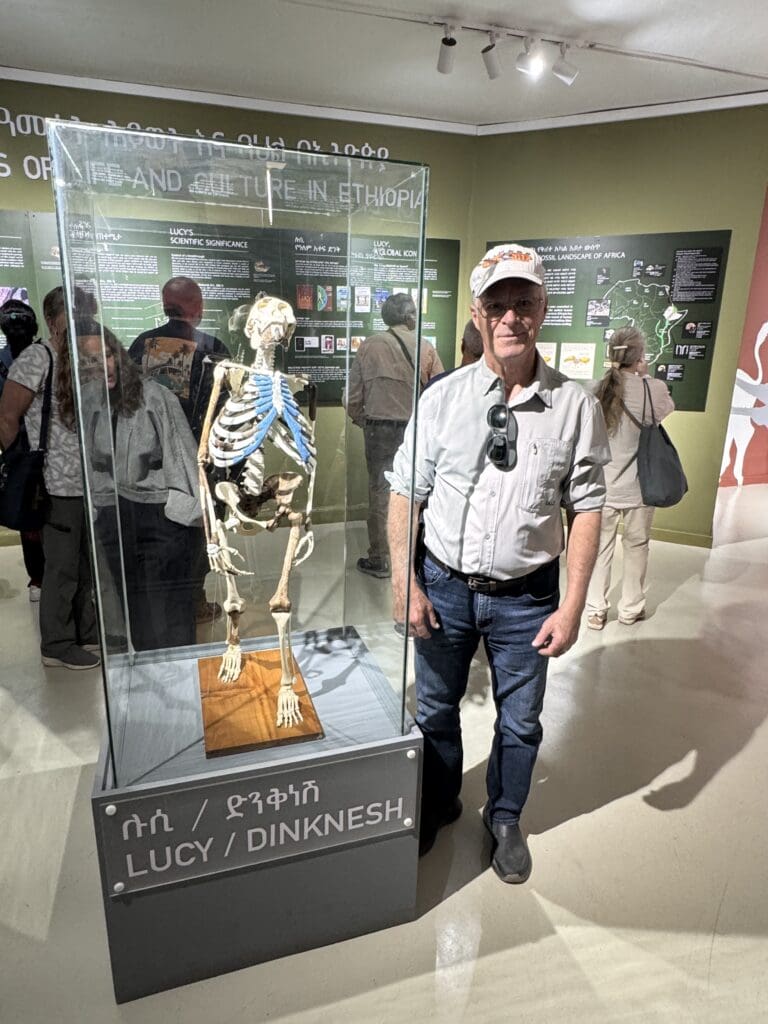
At the Ethiopian National Museum in Addis Ababa, we came face to face with deep time. Here rests “Lucy,” the remarkably complete 3.2-million-year-old skeleton of Australopithecus afarensis discovered in Ethiopia’s Afar region. Seeing her delicate bones—and the careful reconstruction beside them—was quietly profound. In a single room, the timeline of our species seemed to compress, reminding us that Ethiopia is not only rich in culture and faith, but also central to the very origins of humankind.
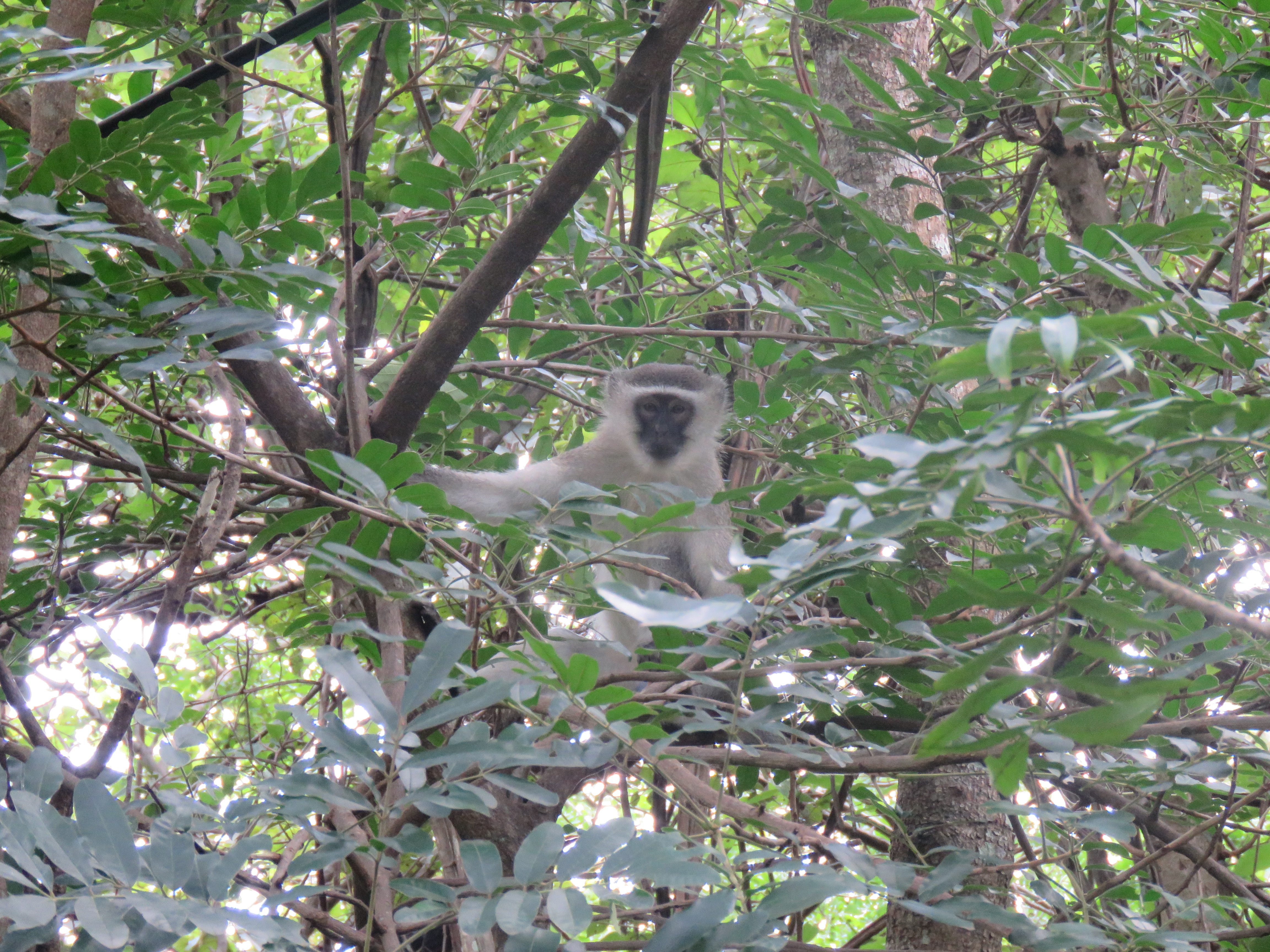
High in Simien Mountains National Park, the scenery felt almost otherworldly—jagged peaks, plunging escarpments, and valleys that disappeared into drifting clouds. At our camp resort we encountered troops of Gelada monkeys, found nowhere else on earth. Unbothered by our presence, they grazed calmly on the alpine grasses, their expressive faces and bright red chest patches vivid against the green plateau. Watching them move along the resort trails with effortless confidence, framed by one of Africa’s most dramatic landscapes, was a moment none of us will ever forget.
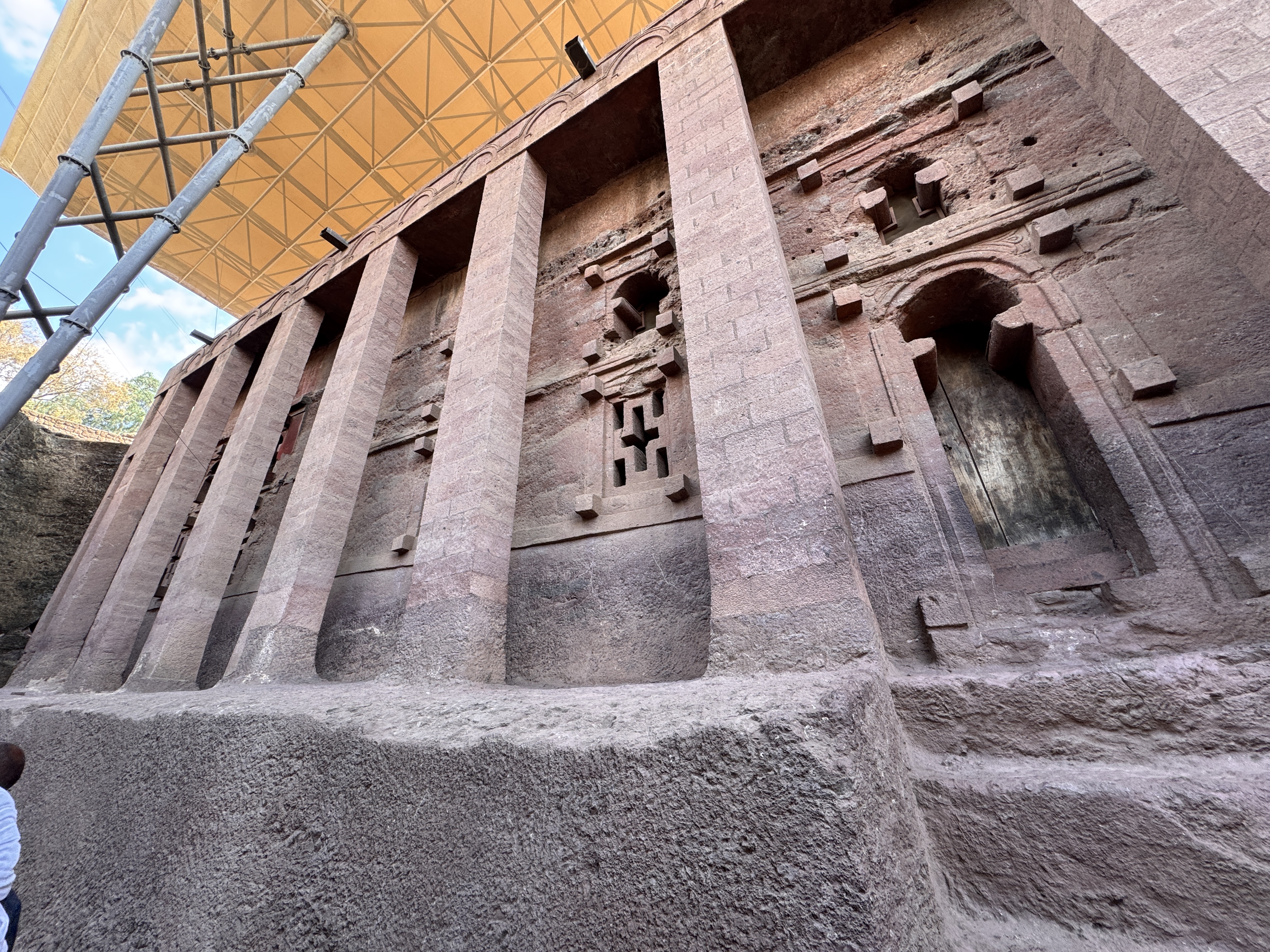
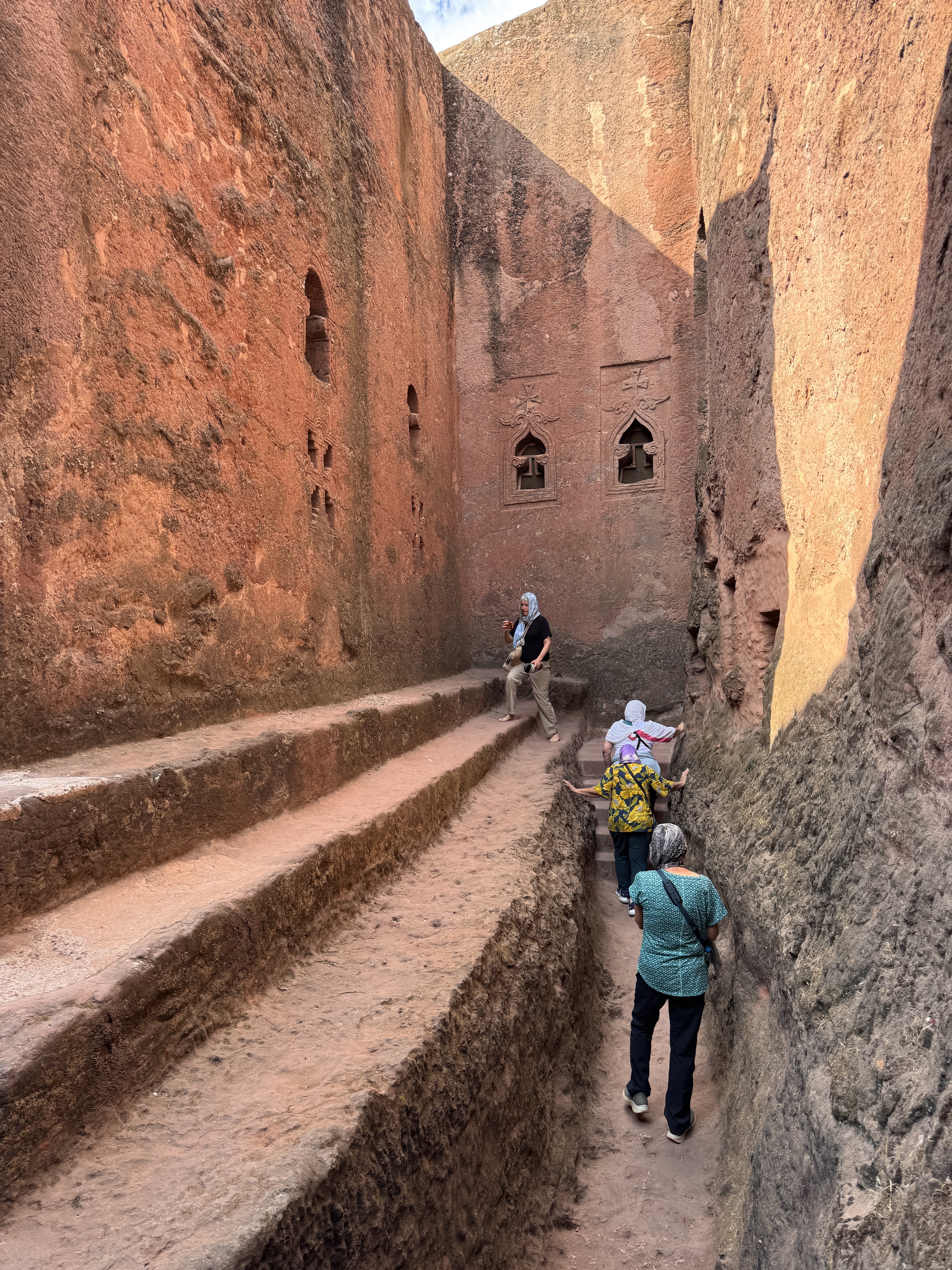
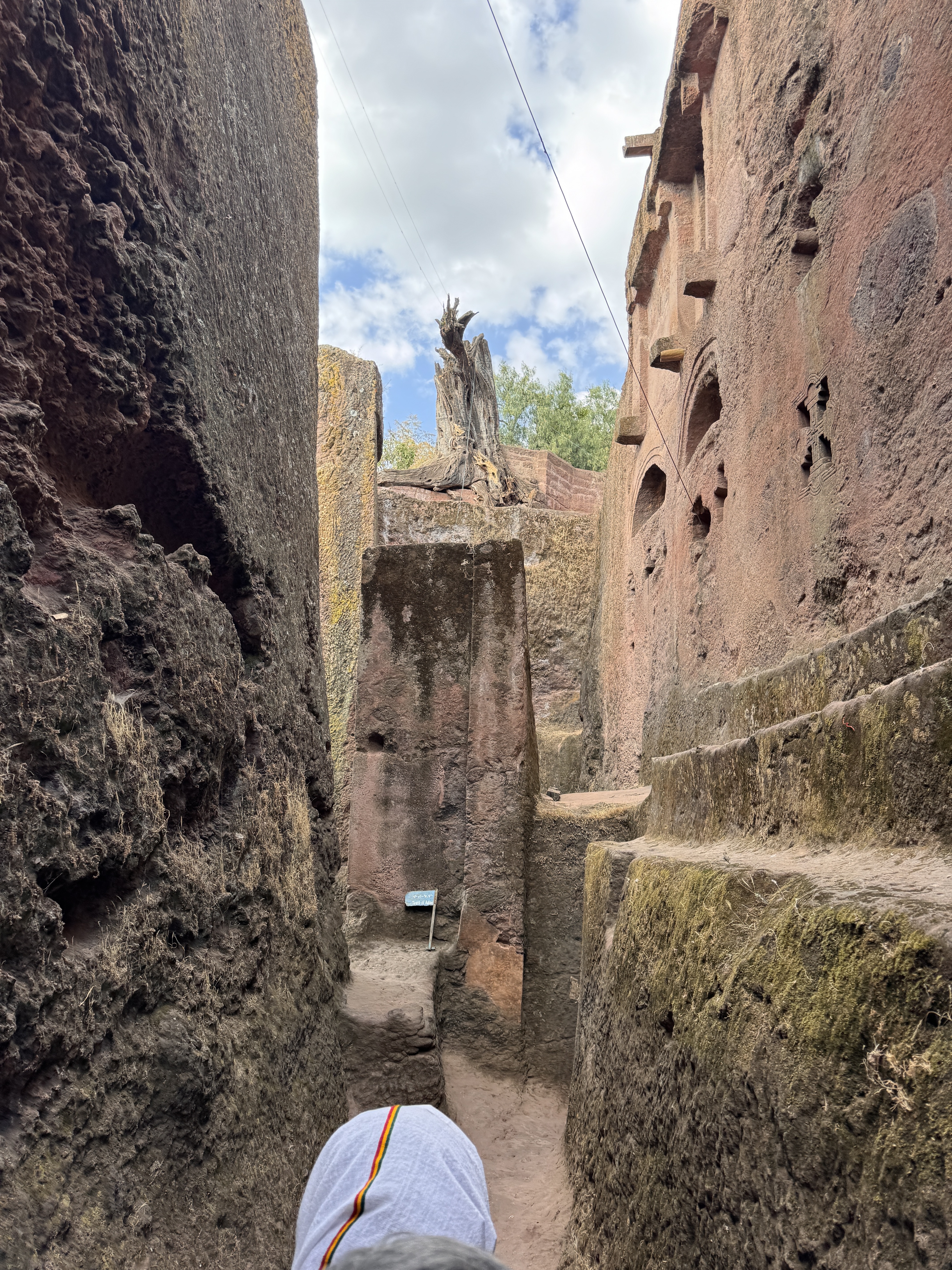
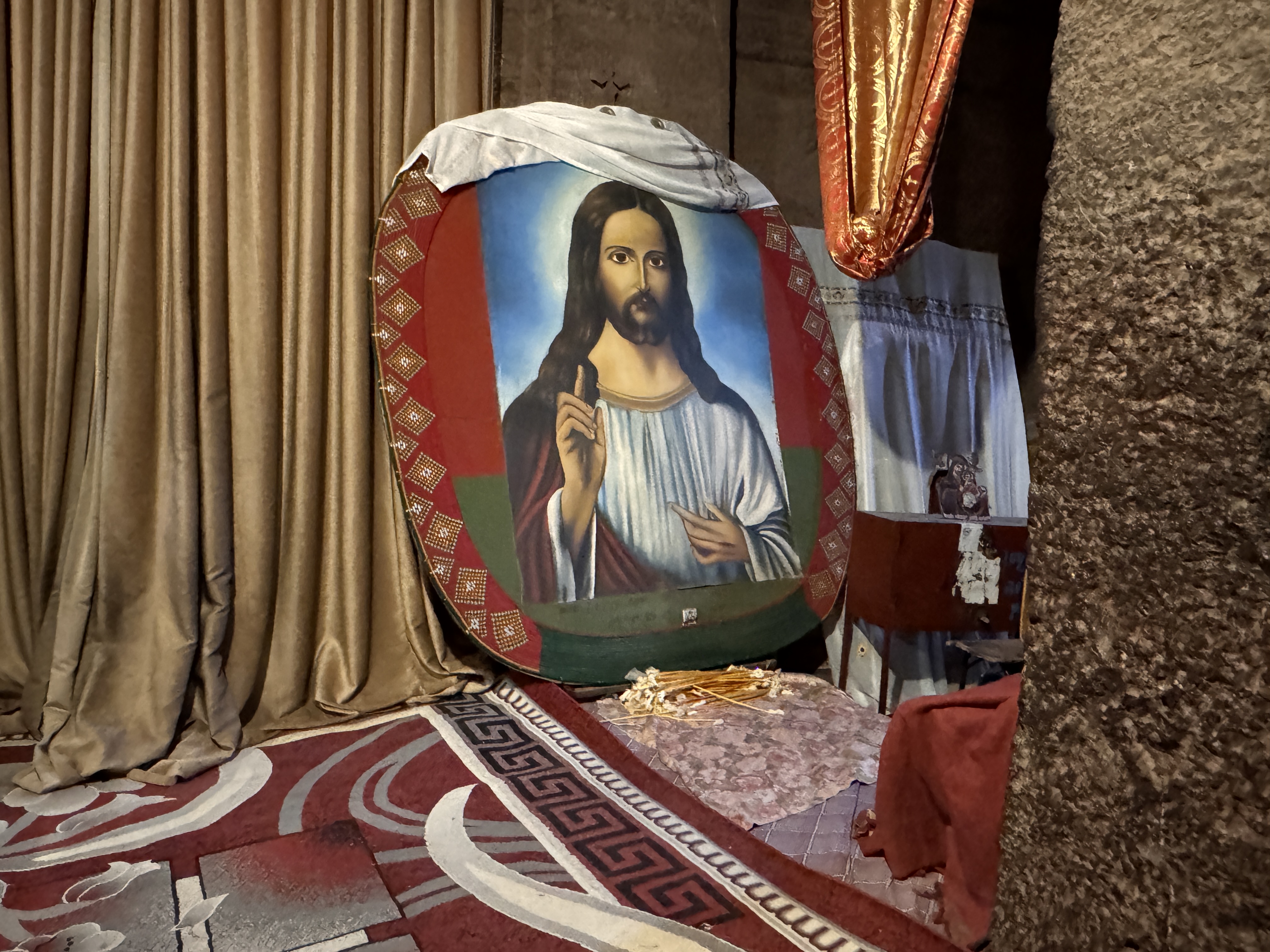
In Lalibela, we descended into a sacred labyrinth where faith and geology meet. The churches are not built from stone but into it—entire sanctuaries carved downward from a single block of volcanic rock in the 12th century. Walking the narrow trenches and shadowed passageways between them felt like moving through a hidden city beneath the earth.
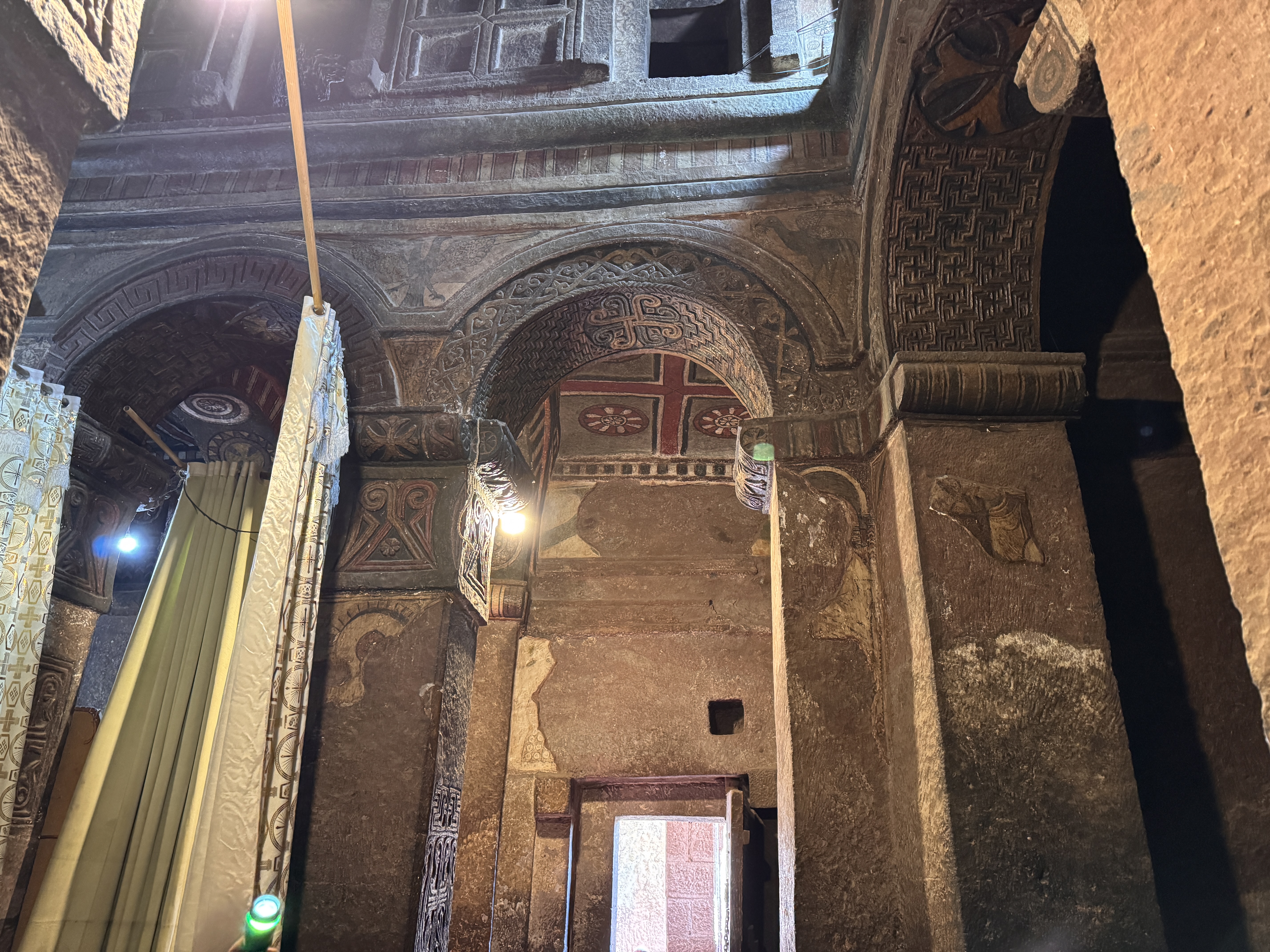
Inside Church of Saint George (Bet Giyorgis), shaped like a perfect cross when seen from above, sunlight spilled over ancient walls as priests in white robes passed quietly through doorways worn smooth by centuries of pilgrims. In cavernous spaces like Bet Medhane Alem, rows of carved pillars rise from the living rock, creating a cathedral that feels both monumental and intimate. Lalibela is not a ruin to be observed—it is a living place of worship where history breathes and prayers still echo off stone.
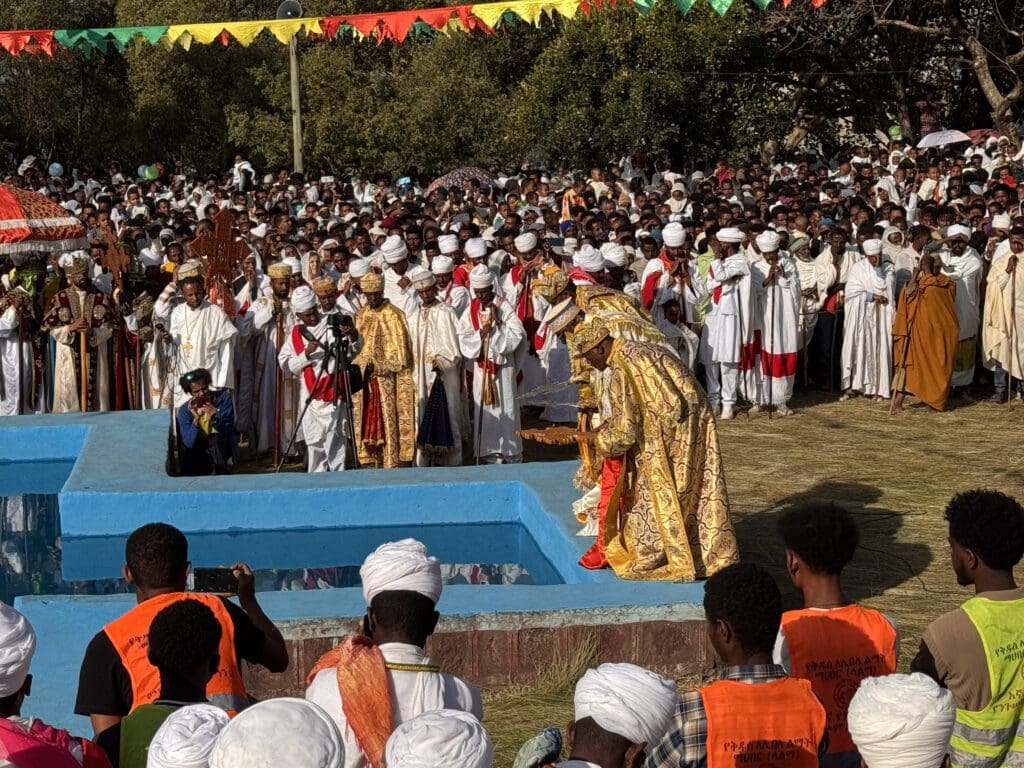
We were fortunate to be present for Timkat, Ethiopia’s Epiphany celebration, and it is difficult to overstate the emotion of the experience. Before dawn, thousands dressed in flowing white shawls gathered as priests, robed in brilliant brocades and shaded by velvet umbrellas, carried sacred replicas of the Ark—tabots—through the streets in solemn procession. Drums throbbed, sistrums rang, chants rose and fell like waves.
At the historic bathing pool in Lalibela, the ceremony reached its crescendo. As prayers concluded, water was blessed and sprayed over the crowd, and many surged forwards to immerse themselves fully. The joy was contagious—part pilgrimage, part celebration, and entirely alive with devotion. It felt less like observing a festival and more like stepping into a sacred story still being written.
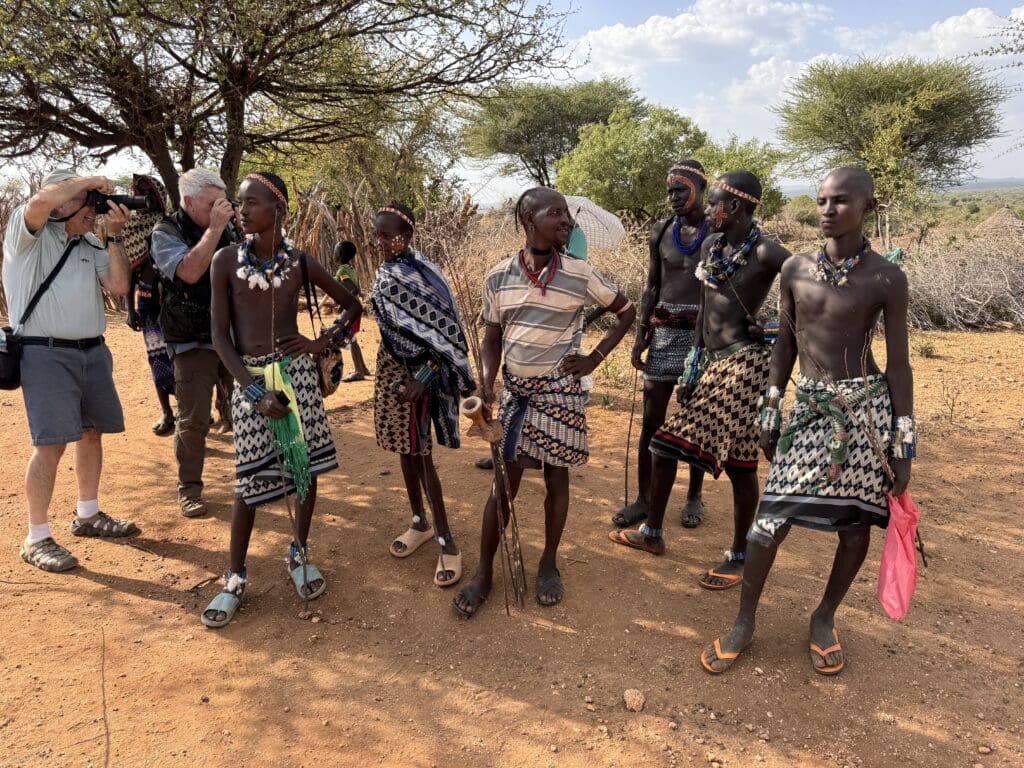
Traveling south from the highlands, the landscapes changed—and so did the rhythms of daily life. In the Omo Valley and surrounding regions, we met communities whose traditions remain vividly present:
- Hamar people – Known for elaborate beadwork, ochre-colored braided hair, and lively market days, the Hamar shared stories of pastoral life and ceremonial traditions, including the famous bull-jumping rite of passage.
- Karo people – Masters of body painting, the Karo adorn themselves with white chalk patterns for celebration and identity. Their villages perch above the Omo River, offering sweeping views and a deep connection to the land.
- Dassanech people – Living near the harsh shores of Lake Turkana, the Dassanech have adapted ingeniously to an arid environment, crafting homes from reeds and recycled materials, and sustaining life through fishing and herding.
- Konso people – Agricultural innovators, the Konso carve terraces into steep hillsides and build stone-walled villages so distinctive that the region is recognized by UNESCO. Their carved wooden grave markers, waga, tell stories of lineage and honor.
- Dorze people – Instantly recognizable for their towering beehive-shaped bamboo houses, the Dorze are also renowned weavers. Inside these remarkable homes, generations live beneath ceilings high enough to outlast decades of slow settling.
- Wolayita people – Farmers of the fertile highlands, the Wolayita cultivate enset (the “false banana”), a staple crop that feeds families year-round and anchors community life.
Ethiopia did not simply present us with landmarks. It welcomed us into living traditions—into faith expressed with color and sound, and into communities where heritage is not displayed for visitors but woven into everyday life. Audrey and I came home with photographs and videos, yes—but more importantly, with stories, faces, and moments we will never forget.