In May 1990, only a few months after watching Steve complete Marine Corps boot camp at Parris Island, I traveled alone from Pennsylvania to Monterey, California, to see him at the next stage of his military service. The trip was short—Friday, May 4 through Sunday, May 6—but it gave me the chance to see where he was living, spend time with him away from home and explore a part of California that was new to me.
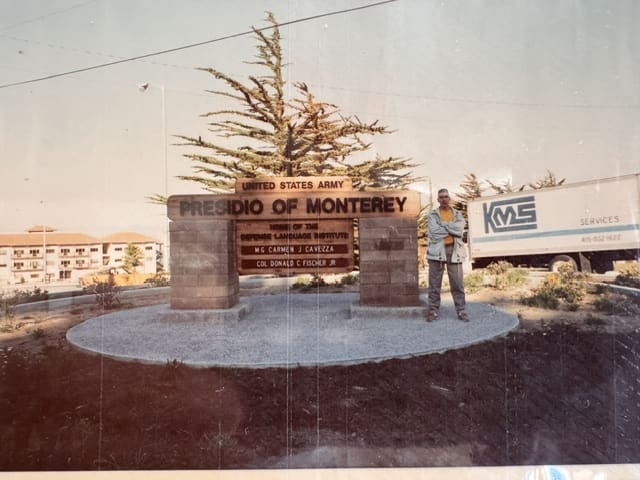
I left Harrisburg International Airport at 7:00 Friday morning, changed planes in Chicago and landed in San Francisco at about 1:00 that afternoon. After renting a car, I drove roughly three hours south to Monterey. Finding the Presidio took some time, but I eventually located Steve’s barracks and met him there. Seeing the entrance sign for the United States Army Presidio of Monterey and then the barracks made his new life tangible. Boot camp had shown me the physical discipline required to become a Marine; Monterey showed me the more ordinary surroundings in which he now lived and worked.
Steve gave me a tour of the Presidio, after which we ate at a Mexican restaurant in a shopping center near his barracks. We then drove the famous 17-Mile Drive through Pebble Beach. The road followed one of the most beautiful stretches of the Monterey Peninsula, where rugged shoreline, dark cypress trees, rocky outcrops and the Pacific Ocean combined to create scenery unlike anything around our Pennsylvania home. That first evening established the pattern of the weekend: time with Steve remained the reason for the journey, but the destination gave us memorable experiences to share.
I stayed at the Best Western DeAnza Inn. After talking there for a while Friday evening, I drove Steve back to the barracks and returned to the motel for the night. On Saturday morning I picked him up at about 10:00, and we began looking at car and truck dealerships around Monterey. At a Toyota dealership, Steve test-drove a truck and decided to buy it. Once the purchase was completed, we left my rental car near his room and used his new truck for the rest of the weekend. Buying a vehicle may not sound like a traditional sightseeing activity, but it was part of seeing Steve become increasingly independent and establish his own adult life.
That afternoon we went to Fisherman’s Wharf, browsed the shops and rented bicycles to ride along the waterfront. The harbor, fishing boats, restaurants and converted commercial buildings reflected Monterey’s long relationship with the sea. Riding bicycles allowed us to experience the waterfront at an easy pace rather than simply looking through a car window.
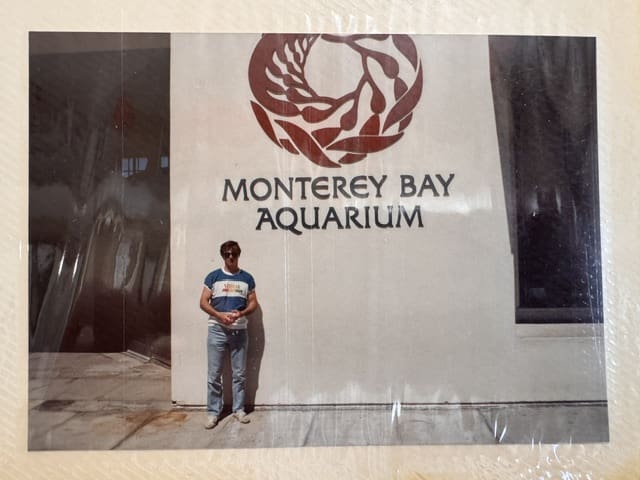
We also visited the Monterey Bay Aquarium, which had opened only a few years earlier in a former sardine cannery on Cannery Row. Its exhibits brought us close to sharks and many other forms of saltwater life. Outside, we watched seals near the pier and tossed fish to them. The aquarium and waterfront turned the bay from attractive scenery into a living environment and made clear how much of Monterey’s identity was connected to the Pacific Ocean.
After dinner at a chicken fast-food restaurant, we drove around Monterey in the evening. The day had included a major purchase, bicycles, marine life and time simply talking and looking around the city. None of it required an elaborate tour schedule. The value came from sharing ordinary decisions and new experiences with Steve while learning more about the place that had temporarily become his home.
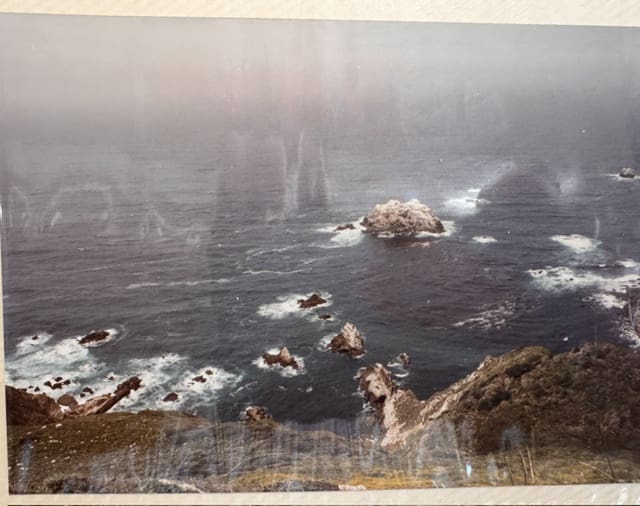
On Sunday we drove south toward Big Sur. The highway followed cliffs high above the Pacific, with steep mountains on one side and the ocean far below on the other. I described the coastline at the time as one of the most spectacular views I had ever seen, and the photographs still explain why. Headlands extended into the water, waves broke against isolated rocks and each turn revealed another view of the coast.
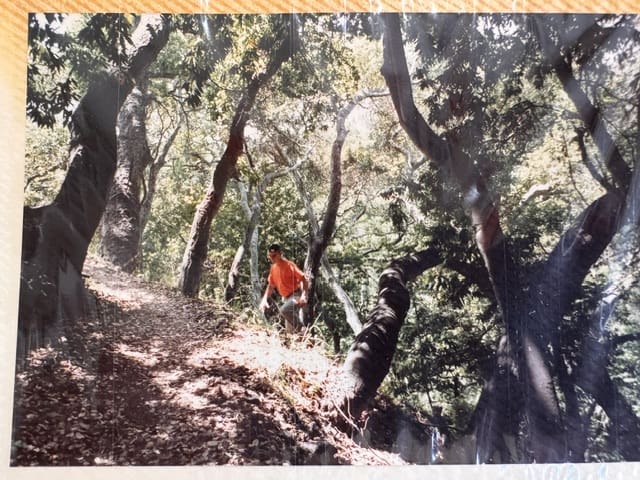
When we reached the Big Sur area, we hiked in one of the state parks. The trail led into a wooded landscape that contrasted with the exposed cliffs along the highway. Hiking together gave us a chance to slow down and experience the region beyond the overlooks. On the return drive, we traveled the same route so we could see the dramatic coastline again from the opposite direction.
That evening we drove through Carmel, hoping to locate Clint Eastwood’s house and to find our friends LuAnn and Tim, who were vacationing in the area. We found neither, but the unsuccessful search became another small part of the weekend’s story. We returned to Monterey, where I dropped Steve at his barracks, said goodbye until the next visit and went back to my motel.
Looking back, the trip stands at an important family transition. Steve was no longer the boy who had traveled with us in the motorhome. He was a Marine living across the country, making decisions about transportation and building an independent life. My purpose was not to collect attractions; it was to remain connected to my son and understand the world in which he was now living.
Monterey added its own gifts to that purpose: the Presidio, Pebble Beach, Fisherman’s Wharf, the aquarium, Big Sur and the wooded state-park trail. The weekend showed that a family visit and a travel experience did not have to be separate things. Someone I loved provided the reason to go, and curiosity about the surrounding place gave us memories that remained long after the visit ended.