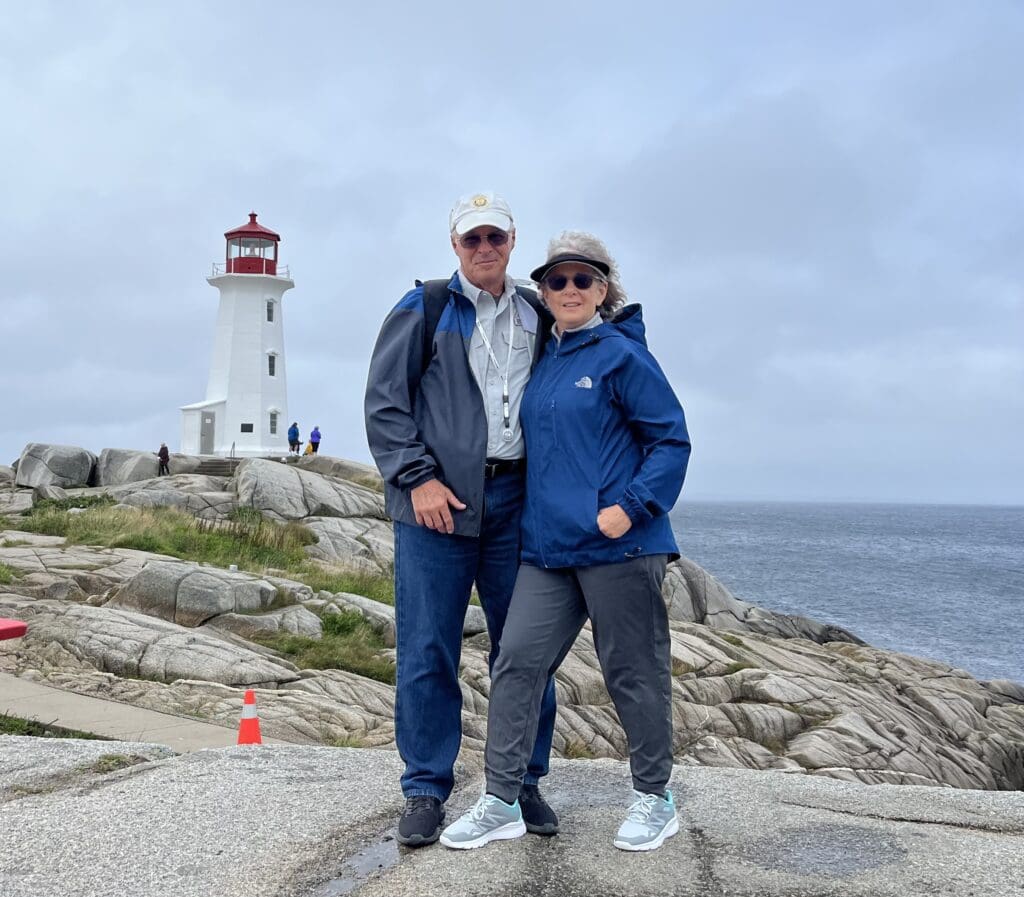
In August 2026, my friend Doug Borrett and I traveled to Norway on Nordic Visitor’s 10-day Classic Norway itinerary. Unlike a traditional escorted tour, this was an independent journey. Nordic Visitor arranged our hotels and major transportation, but Doug and I traveled on our own, found our way between each destination and decided how to use our time.
That independence became an important part of the experience. Instead of following a guide carrying a flag, we studied train schedules, boarded trams and ferries, found bus stops and occasionally headed toward the wrong airport gate. The trip required us to remain alert and adaptable, but it also gave us the freedom to explore Norway at our own pace.
Our route provided a remarkably broad introduction to the country. We visited Oslo, crossed the mountains by train to Trondheim, sailed south aboard the MS Nordkapp, explored Bergen and followed the Norway in a Nutshell route through Voss, Gudvangen and the fjords to Flåm. The final portion took us over the mountains on the famous Flåm and Bergen railways before returning us to Oslo.
Getting to Norway
I left home early on August 2 and picked up Doug for our flight from El Paso to Houston. During our layover, we stopped at a United Club for a late lunch before boarding the overnight flight to Frankfurt.
Our first adventure occurred before we even reached Norway. After arriving in Frankfurt, we went to Gate A64 for our connecting flight to Oslo, only to discover that the correct gate was A25. Frankfurt Airport is enormous, and the two gates were not close together. Fortunately, we recognized the mistake and reached the proper gate in time.
It was a reminder of one of the realities of independent travel: no matter how carefully a trip is planned, travelers must still pay attention, adjust quickly and occasionally walk much farther through an airport than expected.
After the two-hour flight to Oslo, we boarded the Flytoget Airport Express Train. It carried us directly to Oslo Central Station, where we walked to the nearby Thon Hotel Opera. The hotel’s location beside the station and near the waterfront made it an ideal base for exploring the city.
That evening, we walked to Café Cathedral for dinner. After traveling from El Paso through Houston and Frankfurt, we were ready for a good meal and a quiet night.
Exploring Oslo
Oslo was a comfortable city to explore independently. Norway’s capital is modern and active, but its central area did not feel overwhelming. Many of its principal attractions were accessible by walking, tram or ferry.
We began at the Oslo Opera House, one of the city’s most recognizable modern buildings. Its sloping white roof rises from the waterfront and allows visitors to walk from ground level to the top. Doug and I spent about 30 minutes walking across the roof, taking photographs and looking out over the harbor.
The Opera House represented the newer face of Oslo. The city has transformed much of its former industrial waterfront into an attractive public area filled with cultural buildings, restaurants, pedestrian spaces and residential developments. Walking across the roof gave us an excellent introduction to that redevelopment.
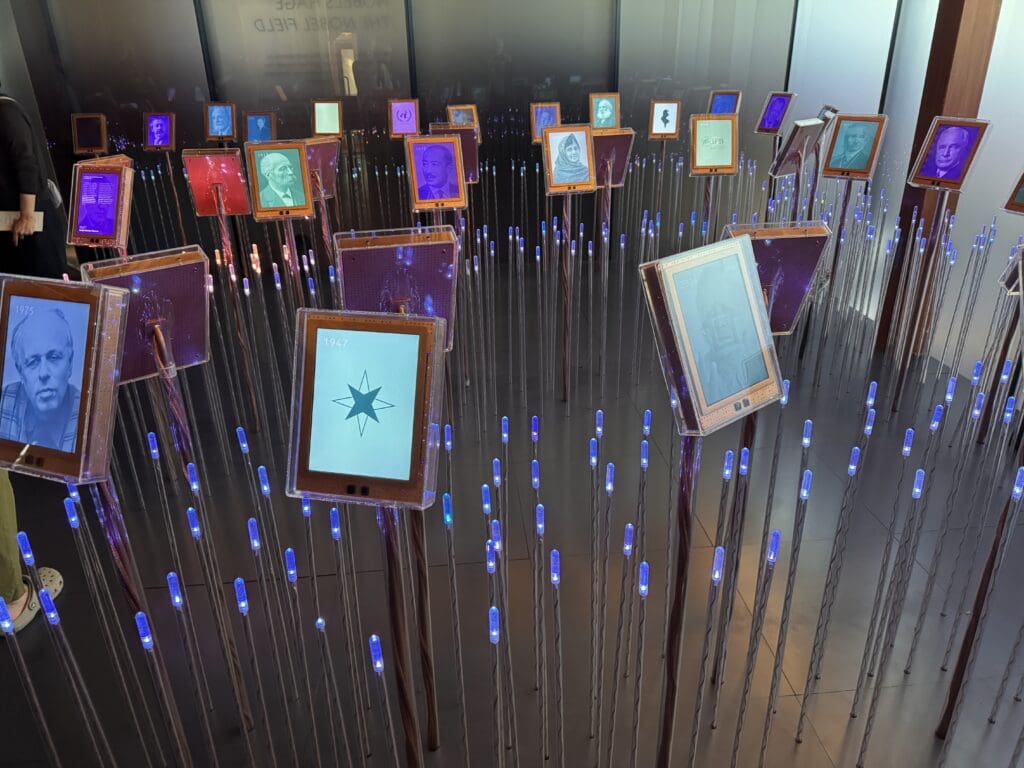
We used Oslo’s tram system to reach Aker Brygge, another waterfront district that had once been associated with shipbuilding and industry. We walked along the promenade before reaching the Nobel Peace Center.
The center explores the history of Alfred Nobel, the Nobel Peace Prize and the individuals and organizations that have received it. The exhibits dealt with war, human rights, peace negotiations and the efforts of people who challenged injustice. They were reminders that peace does not simply happen; it usually results from individuals who are willing to take risks and work through difficult circumstances.
From the waterfront, we boarded a public ferry to the Bygdøy Peninsula. The ferry was not merely transportation. It provided another view of Oslo and demonstrated how closely the city is connected to its harbor and surrounding waterways.
On Bygdøy, we visited the Fram Museum. Its centerpiece is the original polar exploration ship Fram, which carried Norwegian explorers into the Arctic and Antarctic regions. Walking aboard the ship helped us imagine the confined living conditions, isolation and danger faced by its crews. The museum also reinforced Norway’s long association with polar exploration.
Nearby, the Kon-Tiki Museum told a different story of exploration. In 1947, Thor Heyerdahl and five companions crossed the Pacific Ocean on the balsa-wood raft Kon-Tiki. Heyerdahl wanted to demonstrate that ancient people could have crossed great stretches of ocean using relatively simple vessels and navigational knowledge. The original raft was displayed in the museum.
After returning from Bygdøy, an ice cream bar became our light lunch. We stopped at the hotel long enough for me to recharge my phone and then set out again.
Our final major destination in Oslo was Akershus Fortress, which has guarded the harbor since the Middle Ages. Within the grounds, we visited Norway’s Resistance Museum. Its exhibits describe the German occupation of Norway during World War II and the efforts of Norwegian citizens who resisted Nazi rule.
The fortress and museum gave us a different view of Norway from the peaceful, prosperous country we were seeing around us. Norway’s modern stability had been interrupted by invasion and occupation within living memory.
We ended our day with bowls of fish soup at Café Skansen. Fish soup soon became something of a recurring feature of the trip.
Crossing Norway by Train
The next major stage of our journey took us from Oslo to Trondheim aboard the Dovre Railway. Our departure was delayed by approximately an hour, but we eventually began the six-and-a-half-hour journey north.
The train gradually left Oslo’s urban surroundings and entered a landscape of farms, forests, valleys and mountains. It traveled through the Gudbrandsdalen Valley, crossed the Dovre mountain plateau and descended toward Trondheim.
The ride was more than a way of getting from one city to another. It showed us the scale and changing geography of Norway. The country’s mountains, long winters and widely separated communities made transportation difficult for much of its history. Railways helped connect regions that had once been isolated from one another.
We arrived in Trondheim during the afternoon and checked into the Thon Hotel Nidaros. Because we had only a short time in the city, we soon set out on foot.
Our first destination was Kristiansten Fortress, located at the top of a considerable hill. The climb required some effort, but the view helped explain why the site had been selected to defend the city. The fortress was built after a devastating fire destroyed much of Trondheim in 1681 and later played a role in Norway’s military history.
From the fortress, we continued to Nidaros Cathedral. Construction began during the Middle Ages over the burial place of King Olav II, who became Saint Olav. For centuries, pilgrims traveled to Trondheim to visit his shrine.
The cathedral’s elaborate stone exterior and Gothic architecture made it one of the most impressive historic buildings we encountered in Norway. It also revealed Trondheim’s importance as a religious and political center long before Oslo became the modern capital.
After all the Norwegian history and the long walk through Trondheim, we had a decidedly non-Norwegian dinner of chicken quesadillas before returning to the hotel.
Aboard the MS Nordkapp
After breakfast the following morning, we took a taxi to Trondheim Harbor and boarded the Hurtigruten ship MS Nordkapp. The ship was part cruise vessel, part passenger ferry and part working coastal transportation system.
Hurtigruten ships have connected Norway’s coastal communities for generations. They carry local passengers, tourists and freight along a shoreline broken by islands, fjords and isolated settlements. We were aboard for only one night and portions of two days, but the ship itself normally continued on a much longer coastal route.
We explored the vessel, had tea on Deck 4 and then went to Deck 7 to watch our departure. The ship left Trondheim shortly after 10:00 a.m., and we settled into Cabin 507.
As we moved south, we passed islands, narrow channels, rocky shorelines and small coastal communities. The scenery was very different from what we had seen while crossing the mountains by train.
I had French onion soup for lunch and later spent about an hour relaxing in the hot tub. It was a pleasant contrast to our active days of walking through Oslo and Trondheim.
During a stop in Kristiansund, Doug and I went ashore to take photographs and walk around town. Kristiansund is spread across several islands surrounding a sheltered harbor and became known for its fishing and dried-cod trade. Our visit was brief, but it allowed us to see another Norwegian community beyond the better-known cities.
Doug also found time for ice cream before we returned to the ship.
That evening, we had a traditional Norwegian dinner at Table 32. Afterward, we walked around the ship and talked for another hour before retiring for the night.
The next morning, we watched a film describing the ship’s complete coastal voyage and a documentary about the Northern Lights. We remained aboard until the MS Nordkapp reached Bergen.
Bergen—Norway’s Gateway to the Fjords
Approaching Bergen from the sea seemed appropriate because the city’s history has always been connected to ships, fishing and international trade.
After disembarking, we took a taxi to the Thon Hotel Rosenkrantz and then walked toward the harbor and Fish Market. A festival was taking place along the waterfront, filling the area with people, antique fire trucks, buses and brightly decorated small boats.
Nearby stood Bryggen, Bergen’s historic waterfront district. Its colorful wooden buildings and narrow passageways preserve the appearance of the old Hanseatic trading quarter. For centuries, merchants exported dried fish from northern Norway and imported grain and other goods from Europe. Bryggen’s importance has earned it recognition as a UNESCO World Heritage Site.
We ate at one of the Fish Market’s open-air restaurants, where I again ordered fish soup. At that point, fish soup was becoming one of the continuing themes of the trip.
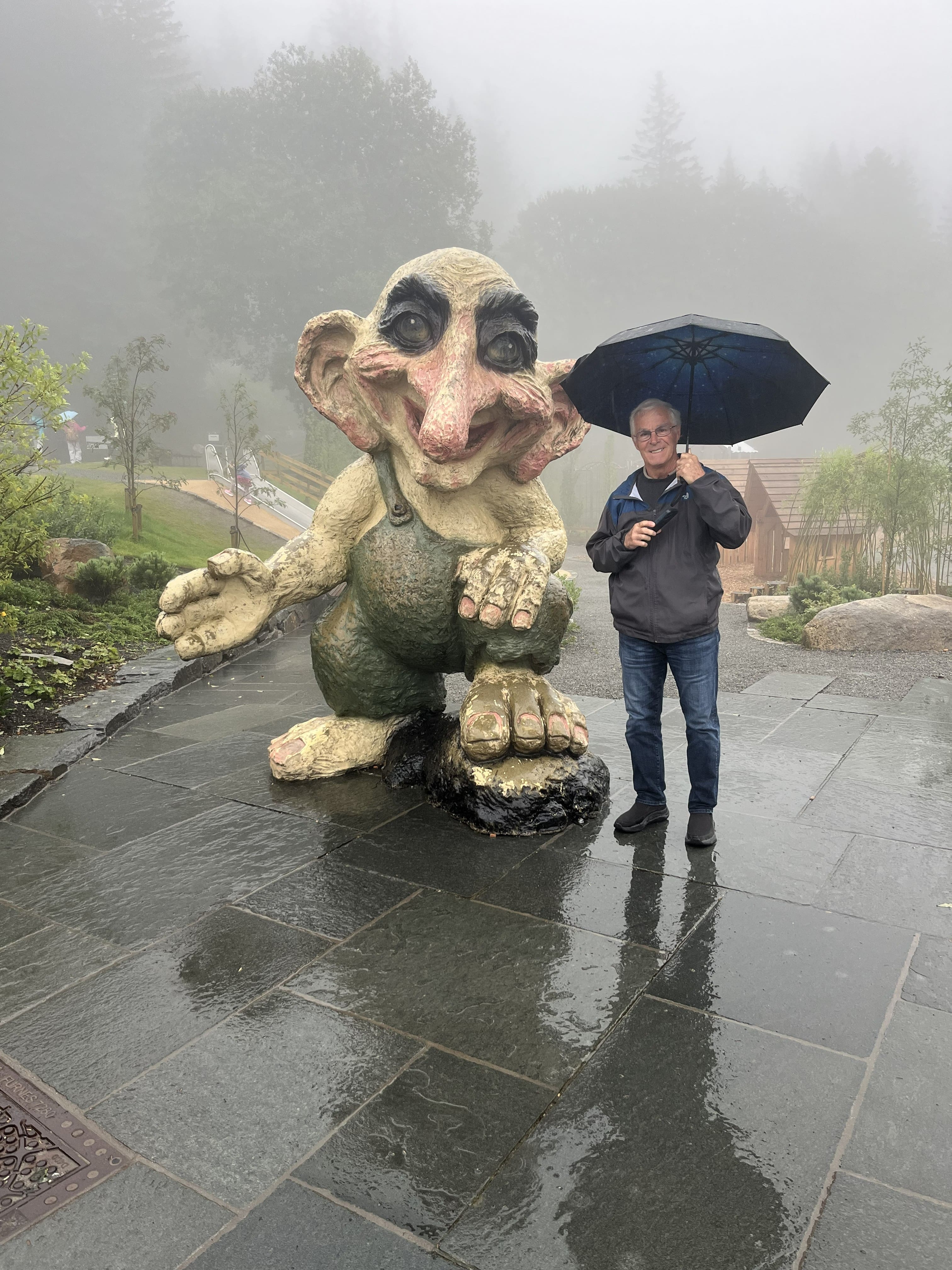
Our full day in Bergen began in heavy rain. We walked to the Fløibanen funicular, waited for the ticket office to open and boarded the 9:30 car to Mount Fløyen.
On a clear day, the summit provides an impressive view of Bergen, its harbor and the surrounding mountains and islands. Unfortunately, the rain and low clouds limited what we could see. We walked around briefly before riding back down.
Travel does not always provide the conditions shown in the brochures. Bergen is known for its rain, and on that morning it lived up to its reputation. The poor weather changed our plans, but it did not prevent us from experiencing the city.
We took a bus to the Old Bergen Museum, an open-air collection of historic wooden buildings arranged to resemble the city during the 18th and 19th centuries. Bergen suffered numerous fires over the centuries, so the preservation of these buildings provided an important record of what much of the older city once looked like.
At the Bryggens Museum, we learned more about Bergen’s medieval past. The museum was built over archaeological remains discovered after a major waterfront fire in 1955. Everyday objects recovered from beneath Bryggen helped tell the story of the merchants, craftsmen and families who once lived there.
We also visited the Bergenhus Fortress Museum. The fortress grounds contain some of the city’s oldest surviving structures and reflect the period when Bergen served as a royal and administrative center.
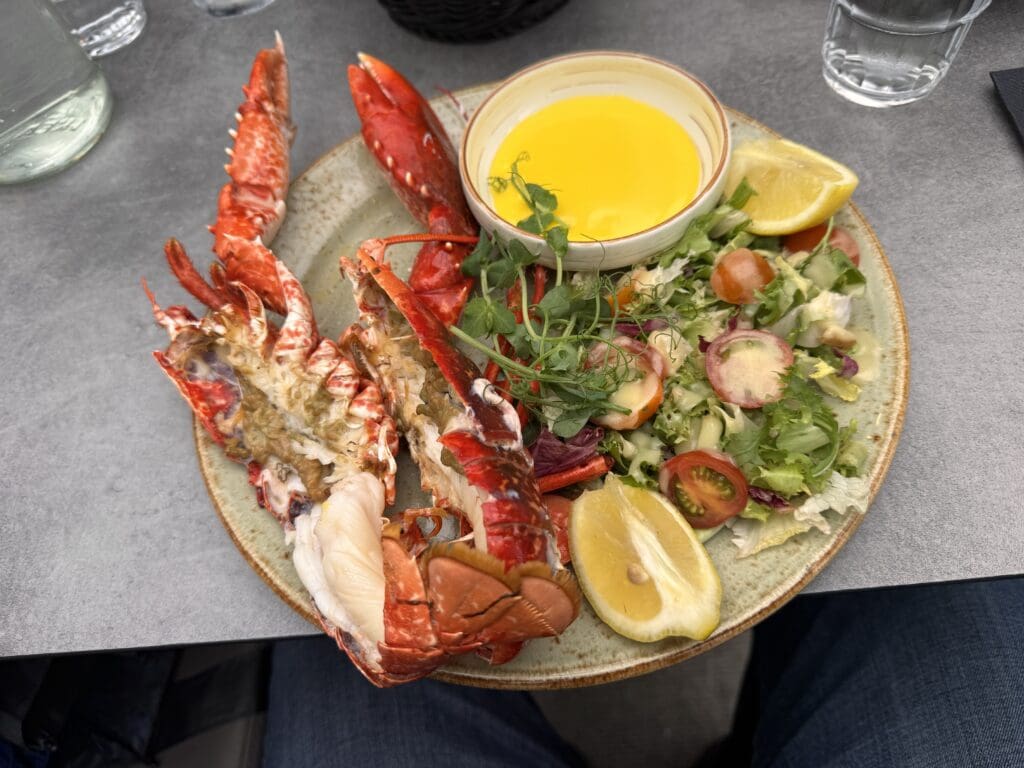
After several hours of sightseeing in the rain, we returned to the hotel to rest and recharge. That evening, we went to the Fish Me restaurant, where Doug and I both had lobster followed by pecan pie with ice cream. We then walked around Bergen for another hour before returning to the hotel.
Through the Fjords to Flåm
The next portion of the trip followed part of the well-known Norway in a Nutshell route. We left Bergen by train and traveled to Voss, where we transferred to a bus for Gudvangen.
The bus carried us through a landscape of mountains, valleys, farms and waterfalls before descending toward the fjord. At Gudvangen, we boarded a boat for the two-hour journey to Flåm.
This became one of the most memorable sections of the entire trip.
Our boat traveled through the Nærøyfjord, one of the narrowest fjords in Europe. Mountains rose almost directly from the water, waterfalls descended from the cliffs and isolated farms appeared on narrow pieces of land beneath the peaks.
The dramatic landscape was created by glaciers that repeatedly advanced and retreated during the Ice Age. They carved deep valleys through the mountains, which later filled with seawater. Understanding how the fjords were formed helped explain their enormous scale, but standing on the boat surrounded by those towering mountains had a greater impact than any description.
The Nærøyfjord is part of the much larger Sognefjord system, Norway’s longest and deepest fjord. Our boat continued into the Aurlandsfjord before reaching Flåm, a small village at the head of the water.
We checked into the Fretheim Hotel and later walked to a restaurant at the Flåm Marina for dinner. The village was quiet after the daytime visitors and cruise passengers had departed.
Above the Aurlandsfjord
The following morning, we joined a bus excursion to the Stegastein Viewpoint. The road climbed high above Aurland, with increasingly dramatic views of the fjord below.
The Stegastein platform projects almost 100 feet from the mountainside and stands more than 2,000 feet above the Aurlandsfjord. Looking down from the platform gave us a clearer understanding of the fjord’s scale. Far below, the water followed the deep glacial valley while mountains rose sharply along both sides.
After returning to Flåm, we visited the Flåm Railway Museum. Its exhibits explained the challenges of building a railroad from the shore of the fjord to the mountain station at Myrdal. Workers had to construct tunnels through solid rock and overcome an elevation difference of nearly 3,000 feet.
We stopped for ice cream and used the afternoon as downtime. I spent part of it working on my travel book.
Writing about the trip while it was still fresh helped preserve details that might otherwise disappear. Even then, I needed photographs, schedules and other reminders to trigger some memories. My memory has accumulated quite a few miles over the years, and occasionally it takes the scenic route before arriving at the information I want.
We had dinner at the Fretheim Hotel and then walked through the village for about an hour before returning to our room.
The Flåm Railway
Before leaving Flåm, we took one final walk through the village. We then checked out of the hotel and waited for our departure aboard the famous Flåm Railway.
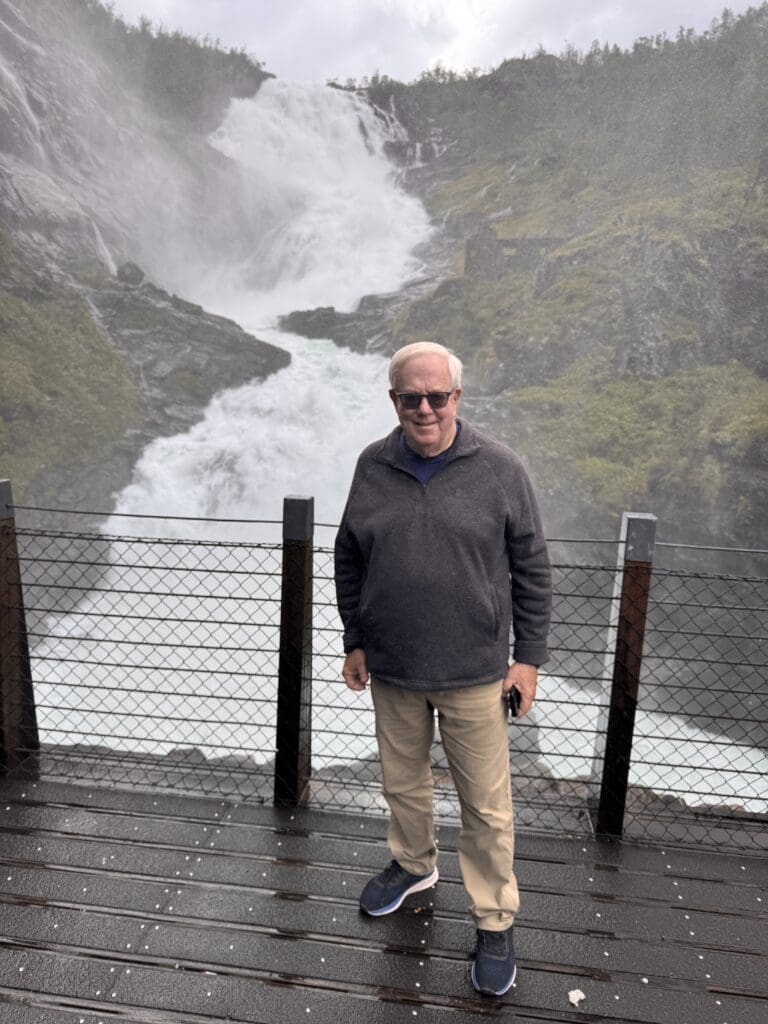
The train climbed from the shore of the Aurlandsfjord to Myrdal, nearly 3,000 feet above it. The route passed through tunnels, followed steep mountainsides and offered views of waterfalls, valleys and scattered farms.
The Flåm Railway was not simply an attraction created for tourists. It connected communities along the fjord with the main Bergen Railway between Bergen and Oslo. Its construction required years of difficult labor in terrain that demonstrated why so many Norwegian communities had once depended on ships rather than roads.
At Myrdal, we transferred to the Bergen Railway for the approximately six-hour journey to Oslo. The train crossed the mountain plateau—sometimes described as the rooftop of Norway—before descending toward the capital.
We returned to the Thon Hotel Opera and settled into Room 621. That evening, we went back to Café Cathedral, the restaurant where our visit to Oslo had begun. I ordered fish soup again, bringing one of the trip’s small continuing stories full circle.
Early the next morning, we walked to Oslo Central Station and boarded the Flytoget train to the airport for our 9:55 a.m. Lufthansa flight. Our time in Norway had come to an end.
Looking Back
This journey gave Doug and me a remarkably complete introduction to Norway in only ten days. We experienced a modern capital, medieval churches and fortresses, wartime history, mountain railways, coastal communities and glacier-carved fjords.
The different forms of transportation were an important part of the story. Trains carried us across mountains that once separated entire regions. The MS Nordkapp showed us how ships continue to connect communities along Norway’s deeply indented coast. Ferries, trams and buses allowed us to explore independently, while the Flåm Railway demonstrated what engineers and laborers accomplished in extremely difficult terrain.
The trip also reinforced the value of traveling with a good friend. Doug and I worked together to find stations, interpret schedules and adjust when trains were delayed or rain changed our plans. We shared the major experiences—the fjords, cathedrals, museums and mountain scenery—but also the smaller moments that gave the trip its personality.
Those moments included going to the wrong gate in Frankfurt, walking up the hill to Kristiansten Fortress, eating ice cream instead of lunch, relaxing in the ship’s hot tub, searching for transportation stops and repeatedly ordering fish soup. Doug’s ability to find ice cream in almost every part of Norway also became part of the story.
Norway’s scenery was magnificent, but the trip was about more than scenery. It showed us how geography shaped the country’s transportation, settlements and history. The mountains and fjords that attract visitors today once made communication and travel extremely difficult for the people who lived there.
The journey also reminded me why I continue to travel. Reading about a fjord, cathedral or polar expedition can provide useful information, but standing in those places adds perspective that cannot be obtained from a book alone. Travel turns geography into something tangible and history into something connected with real communities and landscapes.
Norway was not simply another country to add to my list. It became another chapter in a much larger education—one made more memorable because I shared it with Doug.